AFL Architects | Designing a New Language for the Women’s Game: AFL…
Press enter to search

Designing a New Language for the Women’s Game: AFL Architects on the WSL’s World-First Design Guidelines for Elite Women’s Stadiums

← Back to news & insight

WSL Football has launched the world’s first Design Guidelines for the Delivery of Elite Women’s Stadiums in England, setting a new benchmark for how spaces in the women’s game are imagined and delivered. Developed with AFL Architects, Mott MacDonald and Forward Associates, and others, the framework places equality, inclusivity and sustainability at the heart of future stadium design.

Shaping new standards for the women’s game

The landscape of women’s football is changing. Rapid growth on and off the pitch has created new momentum that demands environments that are built to reflect the ambitions, values and experiences of the women who play, work and support the game.

AFL Architects has collaborated with WSL Football, Mott MacDonald and Forward Associates to create the Design Guidelines for the Delivery of Elite Women’s Stadiums in England, the document is the first of its kind. It provides a framework for clubs, architects and local authorities to design and upgrade venues that truly reflect the needs of women’s teams, players and supporters.
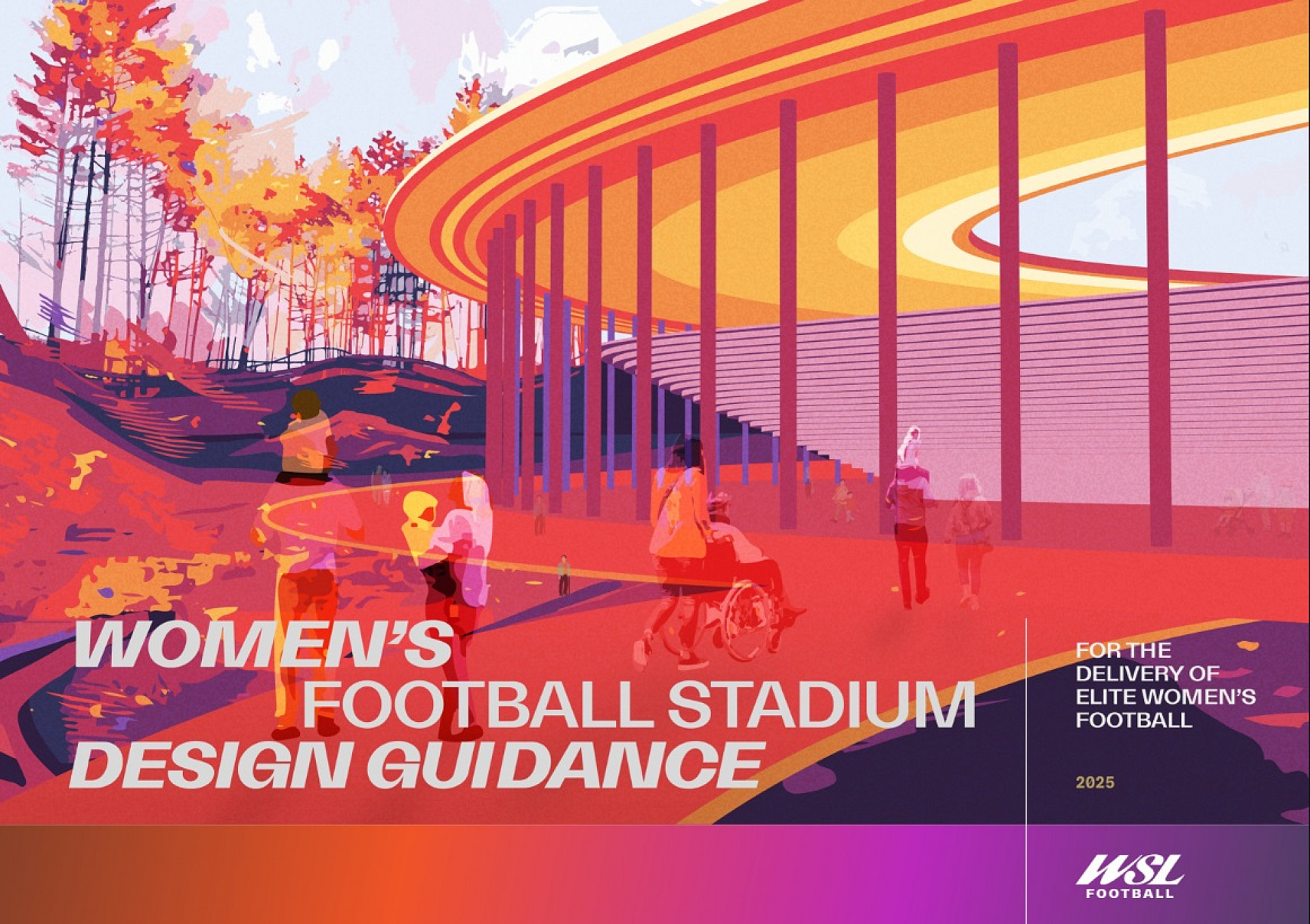

A World-First for the Women’s Game

The guidance brings together insights from across the game, including players, fans, medical staff, broadcasters, governing bodies and many others. The result is a set of practical and achievable recommendations that put equality and experience at the centre of stadium design.

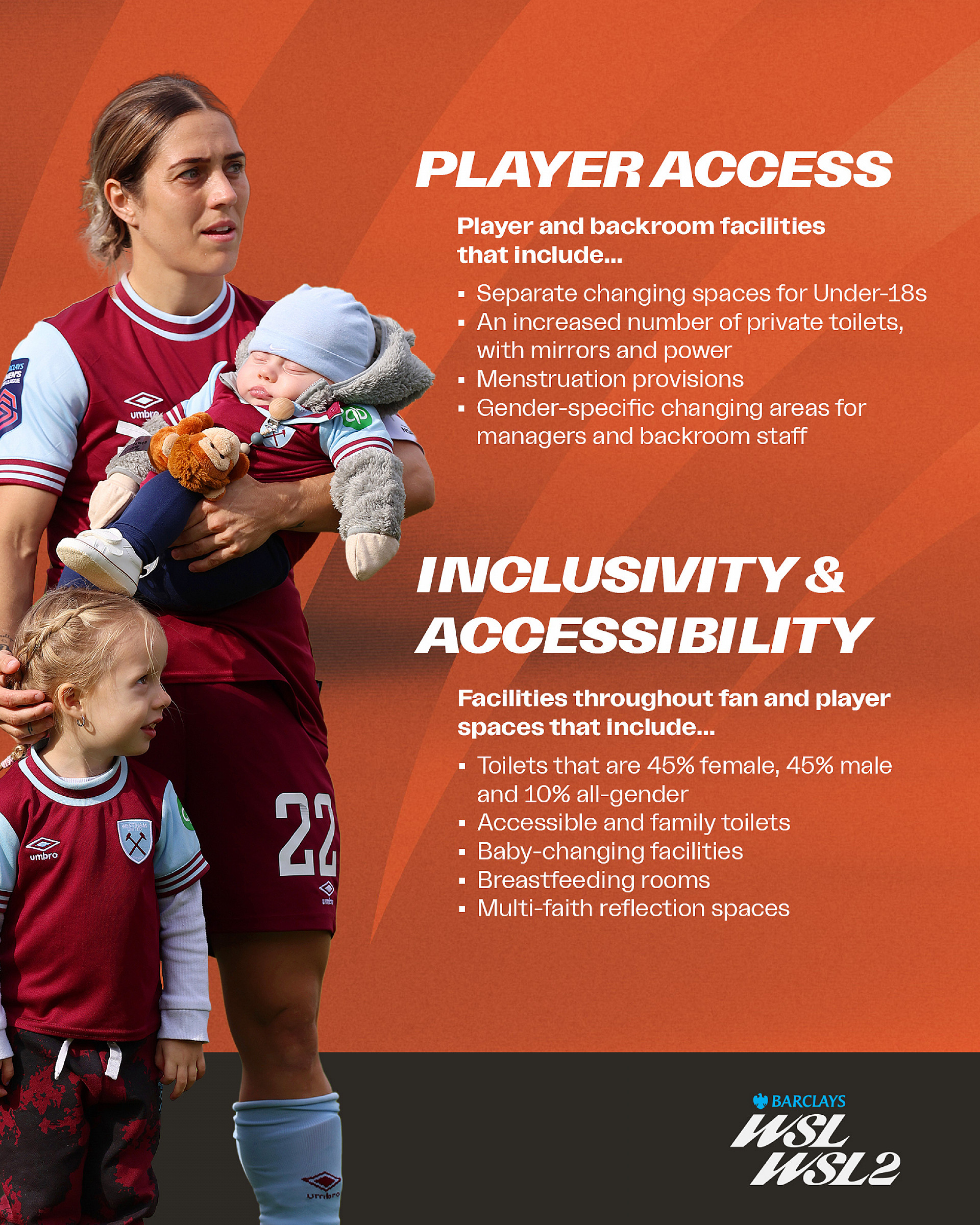
Key principles include a rebalancing of facilities, moving from the traditional 80/20 male-female WC split to a 45/45 balance, with 10% gender-neutral spaces. Family-friendly design features such as baby-changing areas, family toilets, breastfeeding rooms and reflection spaces are encouraged as standard.

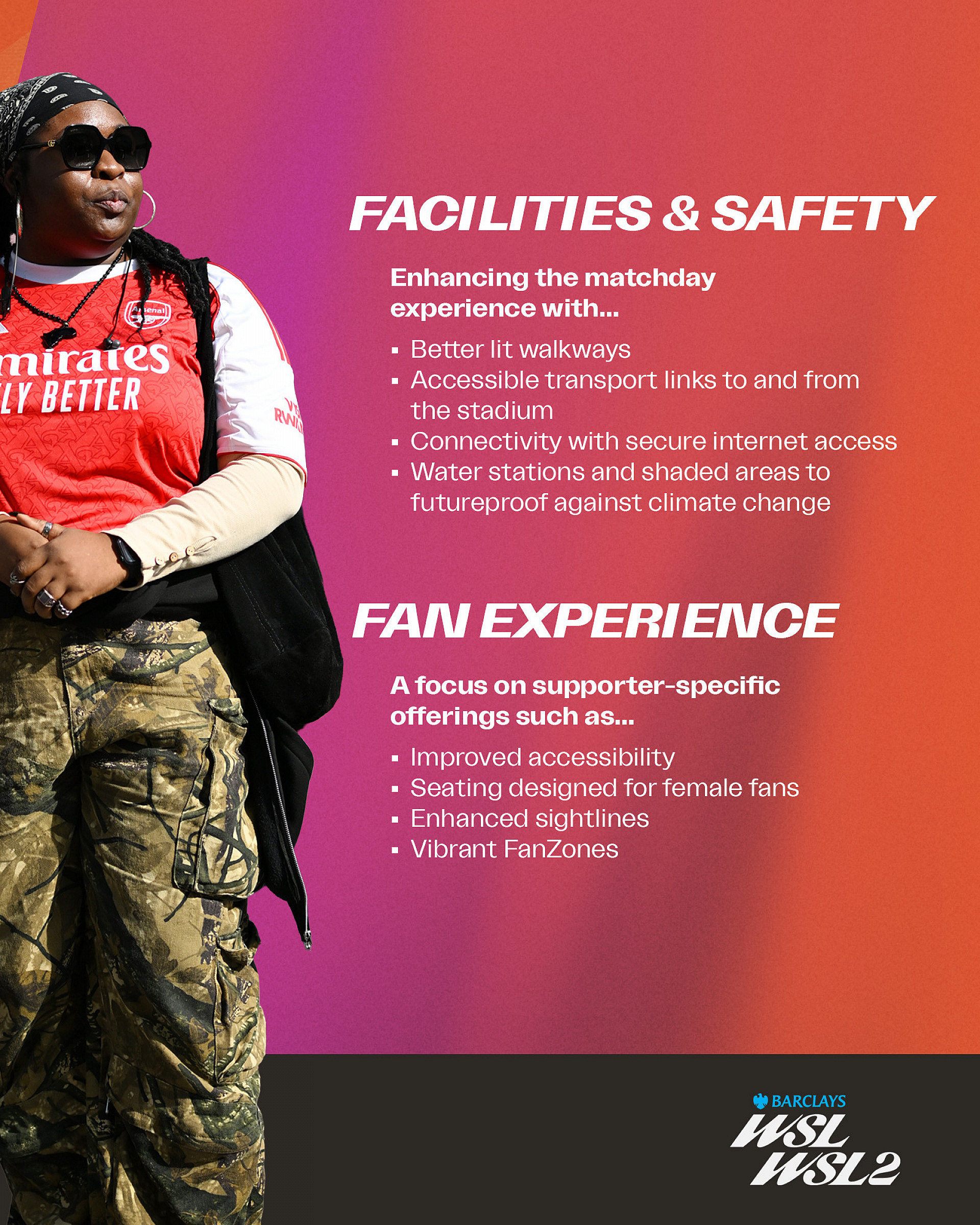
Player facilities are designed to reflect the realities of the modern game, with improved lighting, power and menstruation provisions, as well as dedicated spaces for under-18s and staff. Supporters’ needs are given equal attention, with accessible seating, sensory rooms, audio descriptive commentary and alcohol-free zones offering greater choice and comfort for all fans.

"The WSL Stadium Guidance represents a bold and necessary evolution in how we design for the women’s game. It’s about creating environments that feel safe, inclusive and vibrant, where fans, players and communities feel a genuine sense of belonging.

Developed by AFL’s dedicated women’s sports team, the guidance champions a humancentred approach that reflects the values of women’s football, from flexible layouts and equitable facilities to sustainable and welcoming architecture.

At AFL, we’re proud to have worked alongside the WSL and its stakeholders to help shape a vision that will elevate the matchday experience and set a new standard for the women’s
game."
Kathleen Carthy, AFL Architects

Stadia as Part of the Community

The guidance highlights the importance of viewing football stadiums as part of the wider community. Safety, accessibility and sustainability are key to this approach, alongside a focus on creating venues that remain active and engaging throughout the year, not just on match days.

It encourages designers to consider how people travel to and from grounds, ensuring safe and well-lit routes, strong public transport connections and minimal environmental impact. Climate resilience and low-carbon design are also prioritised, supported by technology-ready infrastructure that can adapt to the future needs of players, supporters and broadcasters.

By embedding these principles from the outset, the guidance promotes stadiums that are welcoming, flexible and connected to their local context, places that can host community activity, foster social value and sustain life well beyond the 90 minutes of play.

"We’re thrilled to unveil this document, it was acknowledged that female specific stadiums were a blind spot in the industry, and the willingness of our stakeholders to come together with their expertise and insights has been inspiring.

The rapid growth of the women’s game in recent years has merely highlighted the need for the latter, and to have those spaces designed with the needs of female athletes and fans at the heart of it.

For ourselves as a league, it is critical that new infrastructure is a part of our clubs’ future
plans – to allow the game to continue to grow, stadium primacy – and venues built through the lens of our players - is key, and our hope is that this guidance will be a catalyst for change moving forwards."
Hannah Buckley, Head of Safety, Sustainability and Infrastructure for WSL Football

Building the Future of the Women’s Game

The rapid growth of the women’s game has made one thing clear, the spaces that support it must evolve too. These new design guidelines are an important step in that journey, ensuring that future stadiums continue to deliver the needs of female athletes and fans.

For AFL Architects, it’s exciting to imagine how these ideas will take shape across the country, influencing new projects, informing upgrades to existing venues, and ultimately helping to create places that reflect the ambition and inclusivity of the women’s game.

We’re looking forward to seeing the framework adopted widely, and to continuing to play a part in shaping stadiums that inspire the next generation of players and supporters.

The guidance document can be viewed in its entirety online at wslfootball.com

Share

Related News