AFL Architects | Redesigning the Game: Preparing UK Stadiums for the…
Press enter to search

Redesigning the Game: Preparing UK Stadiums for the Women’s World Cup 2035

← Back to news & insight

The UK is preparing to host the biggest Women’s World Cup in history.

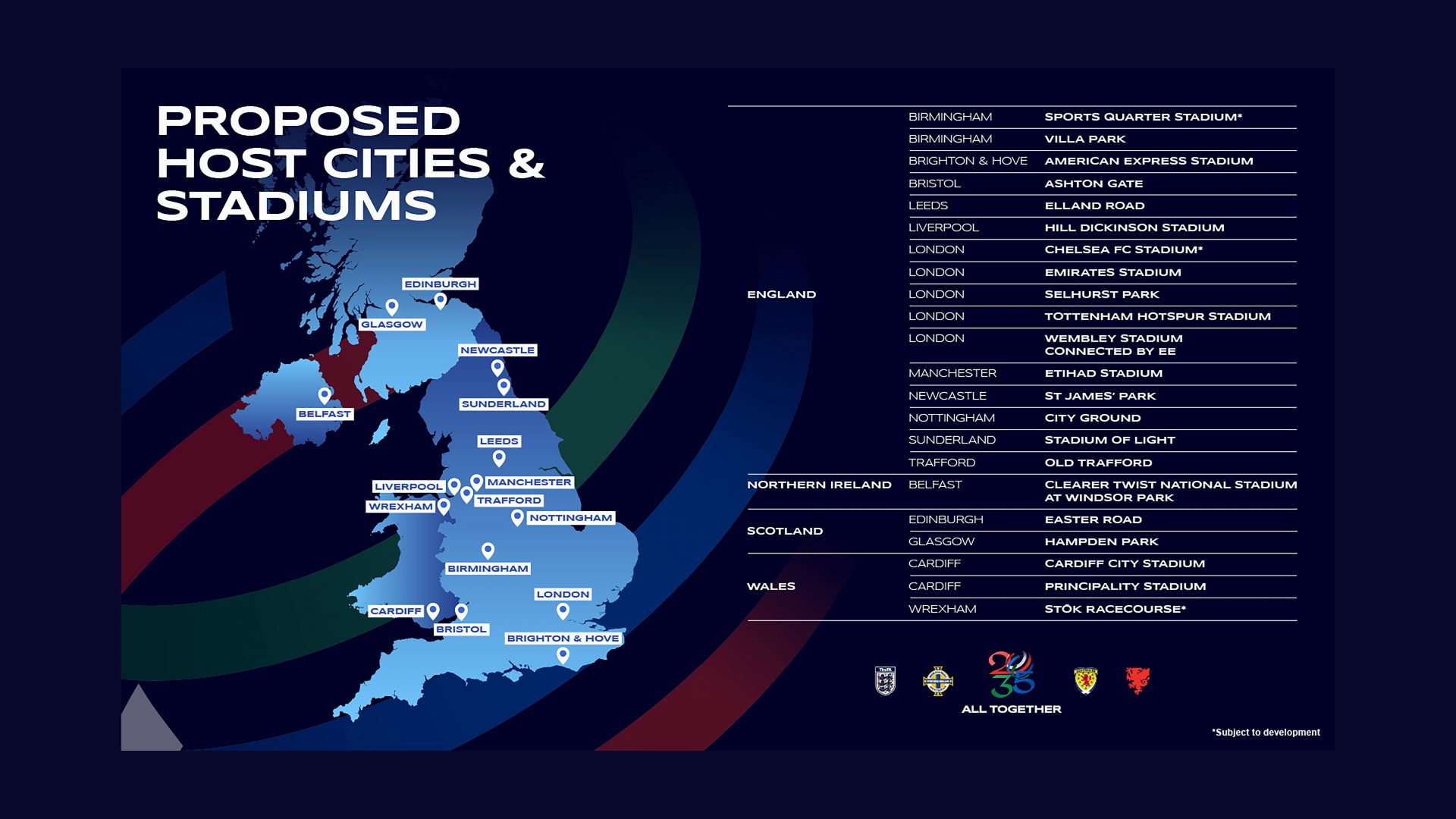
As the Home Nations are officially announced as hosts for the FIFA Women’s World Cup 2035 this April, attention is turning to how ready our existing stadiums are to support both the tournament and the continued growth of the women’s game.

All proposed venues are established men’s stadiums, shaped by long-standing patterns of use, with spectator groups typically characterised by higher male attendance and matchday behaviours associated with the men’s game. However, the global profile of the World Cup, combined with the rapid growth of women’s football, suggests that by 2035 these venues will need to operate at full capacity, accommodating a broader and more diverse audience.

This raises an important question: how well can existing men’s stadiums support the specific demands of the women’s game at this scale?

While many of these venues meet current international standards, there is a growing recognition across the industry that compliance does not always equate to experience. Minimum requirements provide a baseline, but they do not necessarily reflect how different audiences use and interact with a stadium.

As the women’s game continues to evolve, this gap is becoming more visible.

Image source: UK Women’s World Cup 2035 bid materials

Understanding the audience

Women’s football brings a different audience, and with it, a different set of expectations.

The fanbase includes a strong presence of families, a more balanced gender mix, and a matchday culture shaped by inclusivity, safety and accessibility. It is also characterised by a more relaxed and social atmosphere, where the overall experience extends beyond the 90 minutes of play.

At lower attendance levels, existing infrastructure can often absorb these differences. But at full capacity, they become much more visible and begin to affect how well a stadium actually performs.

Patterns of arrival, longer dwell times in concourses, and increased demand for facilities such as accessible toilets, baby change and family-focused amenities all place pressure on infrastructure in ways that were not originally anticipated.

Circulation, dwell time, facilities and wayfinding are not secondary considerations. They fundamentally shape the experience of attending a match.

Over time, these shifts begin to highlight the limits of stadiums that were designed with a different audience in mind.

Image source: WSL Stadium Design Guidance

Existing infrastructure and emerging demands

The stadiums being considered for the World Cup have been developed to support the operational needs of the men’s game. This is reflected in how spaces are planned, how facilities are distributed and how the venue is organised overall.

Through our work on the Women’s Super League Stadium Design Guidelines, it became clear that the women’s game brings different patterns of use and behaviour, with practical implications for how stadiums perform.

Areas such as:

  • concourse capacity and circulation
  • toilet provision and accessibility
  • family-oriented facilities
  • wayfinding and perceived safety
  • food and beverage distribution

are likely to be used in different ways and under different levels of pressure.

At full capacity, these elements start to shape how a stadium works and how people experience it.

Image source: WSL Stadium Design Guidance

Player environments and performance requirements

While much of the conversation focuses on spectators, the experience of players and team staff is just as important.

Elite women’s squads will be hosted in these stadiums, where back-of-house areas such as changing rooms, medical spaces and team support facilities have largely been developed around the needs of men’s squads.

Work undertaken as part of the Women’s Super League Stadium Design Guidelines showed that elite women’s teams operate with a broader and more integrated support structure. That has clear implications for how these spaces are set out and used.

This includes more adaptable changing room layouts and sanitary provision, closer integration of staff and support areas, and greater provision for medical, recovery and wellbeing functions. There is also a stronger emphasis on privacy, safeguarding and inclusive design across the whole team environment.

At tournament scale, these differences become more apparent. The quality of these environments can influence preparation, recovery and ultimately performance, as well as how teams experience the competition.

At this level, player environments are not secondary spaces. They are performance-critical infrastructure.

Ensuring these spaces are fit for purpose is therefore not only a question of equity, but of performance. It is also an opportunity to raise the standard of how the women’s game is supported at the elite level.

Moving beyond temporary adaptation

Major tournaments often rely on temporary overlays to help venues meet specific requirements. These can play an important role in enabling existing stadiums to host events of this scale.

However, they have practical limits.

Space constraints, cost, and operational complexity all restrict what can realistically be delivered through temporary measures. Infrastructure such as toilet provision cannot always be meaningfully reconfigured without significant intervention.

This raises a fundamental question: how can facilities originally designed for a predominantly male audience support a more balanced and inclusive mix, without reducing capacity or compromising experience?

Temporary solutions can support delivery in the short term, but they cannot fully compensate for infrastructure that was designed around fundamentally different assumptions.

Increasingly, the challenge is not just to accommodate a single event, but to create venues that can adapt to different audiences, formats and expectations over time.

As stadia increasingly operate as concert and multi-event venues, audience gender balances are becoming more even, challenging the traditional assumptions that have long informed toilet provision. This shift raises an important question: should venues now provide a higher proportion of women’s facilities as a standard, or adopt more flexible solutions, such as ‘swing’ toilets, that can be reconfigured to suit different event profiles?

Designing for long-term performance

The opportunity lies in aligning existing stadium infrastructure with where the game is heading.

That might mean:

  • introducing more flexibility in how spaces are used
  • rebalancing provision to reflect different audiences
  • improving accessibility and inclusivity across the venue
  • thinking about both how a stadium operates and how it feels to use

The Women’s Super League Stadium Design Guidelines provide a useful starting point, placing inclusivity, safety and belonging at the centre of design thinking.

The next step is to consider how these principles can be applied more widely, informing decisions around refurbishment, upgrade and long-term planning.

These are not marginal adjustments. They are fundamental questions about how stadiums are expected to perform.

Image source: WSL Stadium Design Guidance

A moment of opportunity

The Women’s World Cup 2035 represents a significant moment for women’s sport in the UK.

Making the most of it will require a considered approach, one that recognises the specific characteristics of the women’s game and responds to them through design.

Done well, this is an opportunity not only to deliver a successful tournament, but to demonstrate the UK’s commitment to women’s sport in a tangible way. It is also a chance to show how existing infrastructure can evolve to meet changing demands, and how major events can drive meaningful, long-term improvement.

Image source: WSL Stadium Design Guidance
Kathleen Carthy is a Sports Architect and Women’s Sports Lead at AFL Architects, with over 20 years of international experience. She has delivered major sports venues and training facilities, contributed to projects ranging from elite football training grounds to the Lusail World Cup Stadium, and was part of the in-house Women’s Sports team behind the Women’s Super League Stadium Design Guidelines.
Share

Related News